Fraud and Compliance
How Can AP Automation Ensure Government E-Invoicing Compliance?
Manual invoicing can become a major bottleneck in a fast-paced business environment. These processes are often time-consuming, prone to human error, and costly.
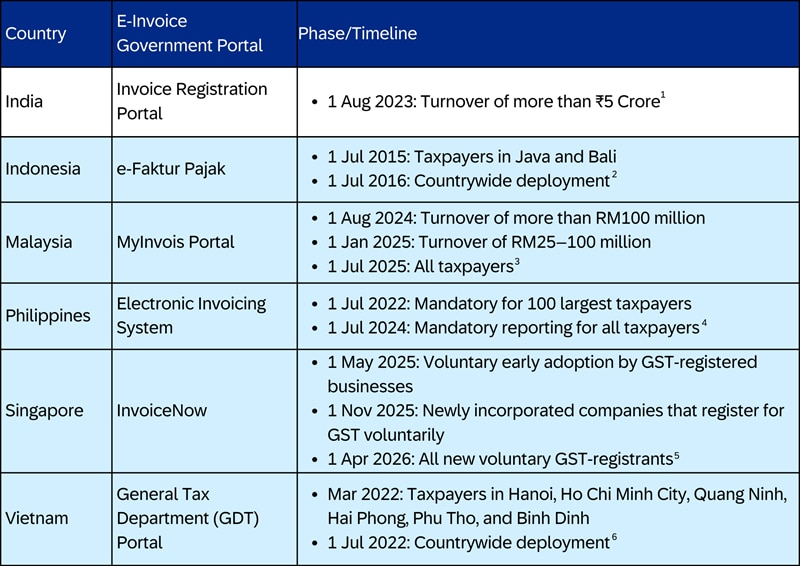
Across Southeast Asia and India, tax administrations are driving invoice digitization through regulatory changes. Many governments now use a designated e-Invoicing portal to improve tax compliance, making it critical for businesses to transition.
Since 2022, India’s Invoice Registration Portal has served as a digital platform to register tax invoices by generating a unique Invoice Reference Number and QR code, enabling real-time reporting. As of 1 August 2023, e-Invoice is mandatory for businesses whose annual turnover is more than ₹5 Crore.
AP automation helps streamline invoicing, improve efficiency, and support compliance with evolving regulations, especially in Asia. Integrating e-Invoices directly into government portals can minimize errors, shorten the tax return process, and provide real-time data insights. This shift supports both operational efficiency and business competitiveness.
How do government e-Invoicing mandates affect your business?
Government e-Invoicing mandates are designed to simplify tax reporting and improve compliance as part of broader digitization programs. Businesses need to understand local requirements and align invoicing teams and processes to meet them.
Taxpayers may be affected by country-specific frameworks and timelines, such as:
- Mandatory GST e-invoicing for taxpayers exceeds threshold limit of INR 5 crore | IndiaFilings
- Electronic invoicing in Indonesia | EDICOM Global
- Guide to e-Invoicing in Malaysia: Everything You Need To Know | BDO
- Mandatory E-Invoicing in the Philippines. Is Your Company Ready? | Comarch
- InvoiceNow | IMDA
- Regulatory updates – Vietnam | Pagero
Non-compliance with these mandates—and missing submission deadlines—can lead to severe penalties, including hefty fines and operational restrictions.
These risks increase the urgency for businesses to adopt AP automation so they can support compliance and avoid costly consequences.
Last updated: 05-09-2024